
Yes. Every tool on this page is free, runs in your browser, and never asks you to create an account or enter payment details. They were built by the Crystal Quest filtration team so you can make sizing and treatment decisions with real numbers instead of guesswork.
Free tools, in your browser, no account
Free Water Quality Tools for Homeowners and Water Pros
Look up water hardness by zip code, check the PFAS contamination map, find what size water softener you need, and turn your water test results into a plan. Built by the Crystal Quest filtration team. Every tool is free, runs in your browser, and takes a few minutes.
How the Tools Work
1
Enter your numbers
A zip code, a hardness reading, or the results from a water test.
2
See where you stand
Plain-English ratings and comparisons against EPA limits.
3
Get your plan
Sizing, schedules, and a system recommendation you can act on.
Pick Your Tool
Grouped by what you are trying to do: calculate, get a recommendation, check your area, or analyze a report.
Calculators
5Plug in your numbers and get sizing, capacity, and cost answers in seconds.
Water Hardness Calculator
Convert any water hardness reading, ppm to gpg to degrees, in one click, so you can compare test results and size equipment without unit confusion.
Open the calculatorWater Softener Size Calculator
Find out what size water softener you need, in real grain capacity, so you never overpay for an oversized softener or run out of soft water with an undersized one.
Size my softenerWater Softener Regeneration Calculator
Find out how often your water softener should regenerate and how much salt that takes, so you stop wasting salt and water on a preset schedule.
Check my scheduleDI Resin Capacity Calculator
Estimate how long your DI resin will last and how many gallons it will produce before exhaustion, so you can plan replacements and know your cost per 1,000 gallons.
Calculate resin lifeSpot-Free Rinse Calculator
See how many spot-free car washes your DI system will deliver in your local water conditions, and what each wash costs, before you buy resin.
Count my washesQuizzes and Selectors
1Answer a few questions and let the tool do the sizing math for you.
Maps
3Enter a zip code and see what is going on with the water in your area.

Water Hardness Map
Check water hardness by zip code: instantly see how hard your water is, in both ppm and gpg, with a plain-English rating from soft to very hard.
Check my hardness
PFAS Contamination Map
Check reported PFAS contamination near your zip code, including levels in parts per trillion and known sites within 25 miles, before you choose a filter.
Check my area
Lead in Water Lookup
Look up reported lead levels in your water by zip code: see your utility's most recent result and how it compares to federal action levels.
Check my lead levelsAnalyzers
1Already have a water test report? Turn the numbers into a plan.
Understand the Numbers Behind Your Results
Each tool gives you a number. These short guides from our learning library explain what that number means and what to do about it.
How hard is my water? What the measurements mean
Water hardness is the concentration of dissolved calcium and magnesium, reported in milligrams per liter (the same as ppm) or grains per gallon. The U.S. Geological Survey classifies anything over 180 mg/L (about 10.5 gpg) as very hard, and most of the central and western United States falls in the hard to very hard range. The hardness map shows where your area sits, and the converter translates any reading between units.
- How to Test Water Hardness at Home: 4 Easy Ways
- Why Does Water Hardness Matter?
- TDS vs Water Hardness: Key Differences
Sizing and maintaining a water softener
A softener sized to your real grain demand regenerates on an efficient cycle, uses less salt, and lasts longer. The sizing calculator and quiz work out that demand from your household size, water usage, and hardness; the regeneration calculator then tells you whether your current settings are wasting salt. If you are still deciding whether you need one at all, start here:
- Do You Need a Water Softener? 8 Signs
- How Do Water Softeners Work? Ion Exchange Explained
- Water Softener Maintenance: Complete Homeowner Checklist
PFAS in your local water
PFAS are synthetic chemicals that do not break down in the environment and cannot be tasted, smelled, or seen in water. The EPA finalized the first national enforceable drinking water limits for PFOA and PFOS in 2024, set at 4 parts per trillion. The PFAS map shows reported contamination near you; these guides explain what the readings mean and which filtration methods actually remove these compounds.
- PFAS in Tap Water: What It Is, Why It Matters, and How to Remove It
- EPA PFAS Drinking Water Regulations: What Homeowners Need to Know
- How to Remove PFAS from Your Water
Water test results explained: choosing the right treatment
A water test report is only useful if you know which numbers matter. The analyzer compares your results against EPA maximum contaminant levels and recommends a system, but understanding the why helps you choose with confidence, especially on well water where you are your own water utility.
- How to Test Your Well Water: Complete Guide
- The Complete Guide to Reverse Osmosis Water Filtration
- Crystal Quest Reverse Osmosis Systems: Which One Fits Your Home?
Deionization for labs, aquariums, and detailing
Deionization polishes water to near-zero dissolved solids, which is why it is the standard for spot-free rinsing, laboratory water, and aquariums. Resin is a consumable, so the DI calculators above help you budget how long your resin will last. These two guides cover how the chemistry works:
Prefer to watch instead of read? The Video Resource Center has installation walkthroughs, product tours, and troubleshooting help from our in-house team.
Water Tools FAQ
The calculators use standard water industry formulas, such as household grain demand for softener sizing and resin capacity ratings for deionization. Results are planning estimates based on the numbers you enter. For decisions that depend on your exact water chemistry, confirm with a water test first and the estimates become much more precise.
The hardness map, PFAS map, and lead lookup are built on publicly available government monitoring data from sources such as the EPA and USGS. They show regional patterns by zip code, which is a strong starting point. They are not a substitute for testing the water at your own tap, since conditions can vary house to house.
Both describe the same thing. Lab reports usually give hardness in mg/L or ppm, while softener sizing in the United States is done in grains per gallon (gpg). One gpg equals about 17.1 ppm. The Water Hardness Calculator translates between ppm, gpg, and degree scales instantly, so use whichever unit your report gives you.
If you already have a water test report, start with the Water Report Analyzer. If you suspect hard water, check the Water Hardness Map for your area, then run the Water Softener Size Calculator. If you are worried about contamination, the PFAS Contamination Map and the Lead in Water Lookup show what has been reported near you. For deionization and detailing, start with the DI Resin Capacity Calculator.
They get you most of the way there. The Water Report Analyzer and the quiz both end with a system recommendation matched to your inputs. If you want a person to confirm it, send us your numbers through the free recommendation form and our filtration specialists will review them against your water, home size, and budget.
Start with the Water Hardness Map: enter your zip code and you get local hardness in ppm and gpg with a plain-English rating. For the exact number at your tap, confirm with a test strip or a lab test, then run the reading through the Water Hardness Calculator to convert units and through the Water Softener Size Calculator if you are considering a softener.
The PFAS Contamination Map shows monitoring results reported near your zip code, including levels in parts per trillion. A clear result does not guarantee zero PFAS at your tap, and a nearby detection does not prove your tap is affected, so treat the map as a screening step and confirm with a certified lab test if you are concerned.
Keep Learning
Guides from the Crystal Quest learning library, written by the same filtration team that built these tools.


Talk to a Specialist
Want a Person to Check Your Numbers?
Run any tool above, then send us your results. Crystal Quest filtration specialists will review them and recommend a system, free of charge.
- A system matched to your water, sized for your home, and fitted to your budget
- Every number on your report read line by line by a specialist
- Straight answers on filtration vs softening vs reverse osmosis
- Response within 1 to 2 business days, no obligation
Prefer to talk it through?
1-800-934-0051
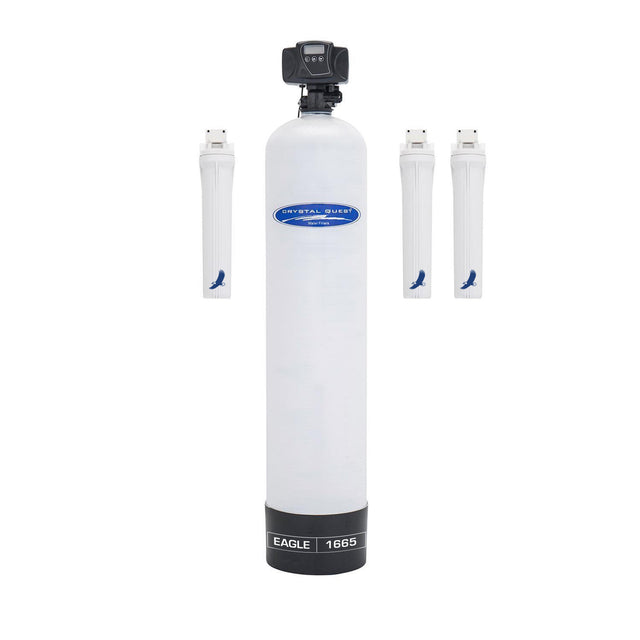
Whole house, under sink, and reverse osmosis. We match one to what your results actually show.
A specialist reads your results
Send over what your tools showed and we will tell you which system fits.
Get a free recommendationFour short steps. No account required.